
Medical Food (Dairy) Mixing Line


Overview:
This mixing line integrates automated production technology to achieve automatic external cleaning and sterilization, bag opening and feeding, weighing and dosing, automatic blending, and automatic packaging. It adopts fully enclosed transfer and air-flow blending technology, combined with pipe conveying and sealed storage to enable continuous production. The system is equipped with CIP cleaning and pasteurization, ensuring high equipment cleanliness. An automatic control system supports data recording and storage for efficient production management. This line reduces labor intensity, material waste, and production costs. It is widely applicable to milk powder, health products, dairy products, and additives industries.
Core Advantages
Automated material conveying reduces labor intensity and improves personnel utilization by 30%.
Fully enclosed transfer lowers material waste and saves production costs by 5–10%.
Air-flow mixing combined with pipe conveying and sealed storage enables continuous production and improves efficiency by 20%.
CIP cleaning and pasteurization ensure high equipment cleanliness and reduce quality risks by 30%.
Automatic control with data recording and storage reduces office costs by 10%.
Product Features
This mixing line features automated external cleaning and sterilization, bag opening and feeding, weighing and dosing, air-flow blending with pipe conveying, sealed storage for continuous production, CIP cleaning and pasteurization, and automatic control with data recording.
Product Applications
Designed for Food for Special Medical Purposes and dairy production, this line is suitable for milk powder, health products, dairy products, and additives requiring high hygiene standards and automated blending.
Precautions
Install the line on a level surface. Verify all seals before operation. Run CIP and pasteurization cycles regularly. Inspect conveying pipes for residue buildup. Disconnect power prior to maintenance. Follow cleaning protocols when switching product types.
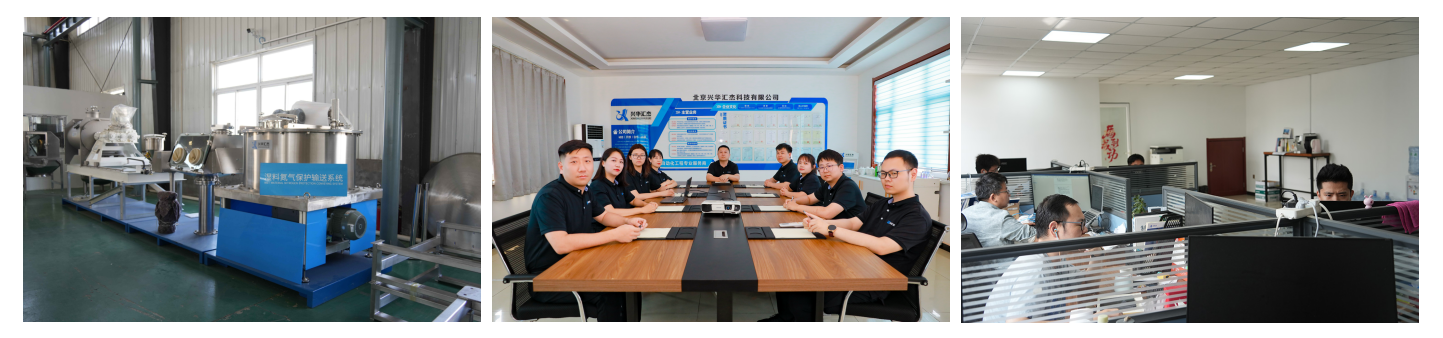
Picture of Factory
Why Choose Us
1. Engineering depth
Layouts are checked against your P&ID and hazard study to align interfaces, venting, and access platforms with site standards.
2. Manufacturing traceability
Material certificates and weld maps can be bundled for FAT documentation, supporting audit-ready pharmaceutical projects.
3. Lifecycle support
Spare parts kits, on-site commissioning, and remote guidance shorten startup time and keep feeding performance stable.

FAQ
Q: What is the difference between CIP cleaning and pasteurization in this line?
A: CIP cleaning removes internal residue without disassembly using circulating solution, while pasteurization applies heat to eliminate microorganisms for higher hygiene assurance.
Q: Can this line run continuously without stopping between batches?
A: Yes. Air-flow mixing combined with pipe conveying and sealed storage allows material to flow directly from feeding to packaging without interruption.
Q: Which specific costs does automation help reduce?
A: Automation lowers labor expenses through reduced manpower, cuts office costs via digital data recording, and minimizes material waste with enclosed transfer.
信息收集
NAME*
*Email*
*WhatsApp*
*Subject & your message*
*


