

| Contact Us |
| Name:colin |
| Email:colin@xhhjtech.com |
| T e l:+86 18602602237 |
What Causes the Vacuum Conveyor to Trigger Alarms
The vacuum conveyor relies on high vacuum and inert gas to achieve enclosed material conveying. During operation, alarms may be triggered by various factors, which can affect conveying efficiency.
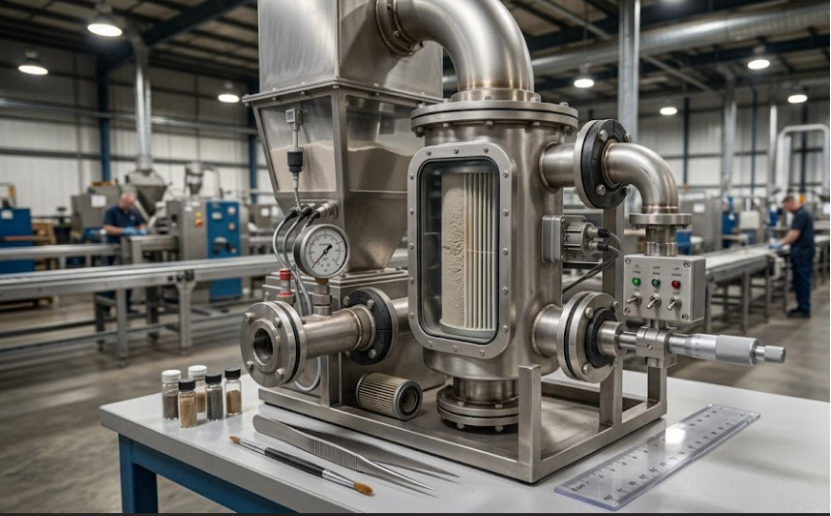
Improper setting of the feeding time may cause the system to fail in completing material suction within the preset cycle, thereby triggering an alarm. In this case, the time parameters can be readjusted. Material shortage alarms are the most common type, usually caused by the suction inlet being unable to draw in material properly, due to reasons such as material supply interruption, clogged suction pipesor insufficient material level in the hopper. Damaged sensors or abnormal signals can also lead to false alarms, requiring inspection of their connections and operating status and replacement when necessary.
Aged sealing rings or clogged filter elements are also important causes of alarms. The former leads to a drop in vacuum level, while the latter increases system resistance, both of which can affect normal equipment operation. Routine inspection and maintenance of vulnerable parts such as seals and filters should be strengthened. In the event of filter clogging, reverse air blowing can be used for cleaning; if this proves ineffective, the filter element should be removed for thorough cleaning or replacement.
In summary, verifying the condition of key components such as seals, filters and sensors before equipment startup, along with proper setting of feeding parameters, is essential for effectively preventing alarms and ensuring the continuous and efficient operation of the vacuum conveyor.


