

| Contact Us |
| Name:colin |
| Email:colin@xhhjtech.com |
| T e l:+86 18602602237 |
Reunderstanding“Standalone Equipment”:From Isolated Machines to Intelligent Production Nodes
On traditional production lines, a grinder or mixer is often simply an isolated “execution unit” with a specific function. However, from the perspective of an advanced industrial ecosystem, the role of modern standalone equipment has been completely redefined. It has become a key node in an intelligent production network.
Three Core Capabilities of Standalone Equipment
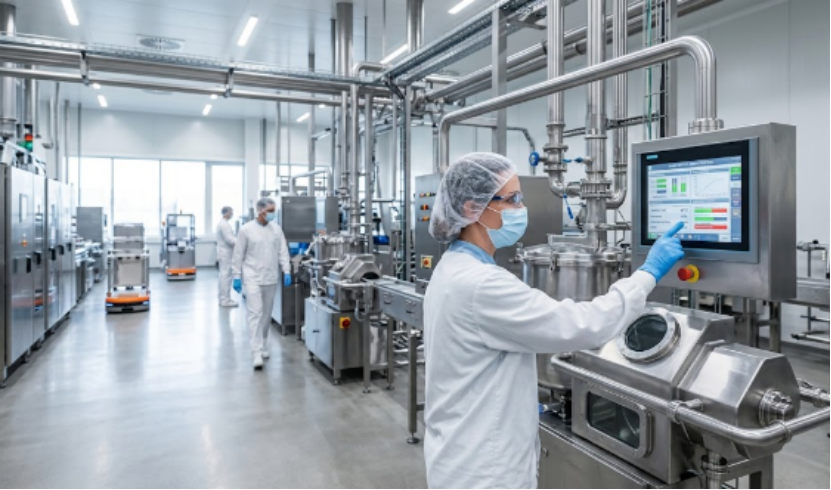
1. Data Connectivity, Breaking Down Information Silos
Modern standalone equipment is equipped with sensors and standard communication interfaces. It can transmit real-time operating data, such as current, temperature and vibration, to the central control system and receive remote commands. This provides the data foundation for continuous production.
2. Closed and Safe Operation, From an Advantage to a Requirement
In the pharmaceutical, food and chemical industries, equipment sealing directly affects product purity, operator safety, and environmental compliance. A high-quality vacuum conveyor, for example, must have a sealing design that works with the pressure gradient of the entire production line to prevent leakage.
3. Modular Compatibility, Flexible for Future Integration
With a modular design, standalone equipment can operate independently or be seamlessly integrated into an automated production line. This makes it easy to upgrade from individual machine operation to coordinated system operation.
A Major Upgrade in Equipment Control
Traditional buttons are being replaced by touchscreens integrated with an HMI (Human-Machine Interface). Operators can call up recipes with one touch and monitor process curves in real time. The system can even automatically provide maintenance reminders based on operating hours, shifting maintenance from “repair after failure” to “preventive maintenance.”
When selecting standalone powder-processing equipment, you should look beyond its processing capabilities. Its data connectivity, compatibility with closed systems, and potential for system integration are equally important. These capabilities are the gateway to the smart factory of the future.


