

| Contact Us |
| Name:colin |
| Email:colin@xhhjtech.com |
| T e l:+86 18602602237 |
Conveyor Belt Running Off Track and Wearing Out Fast? Don't Replace the Belt Just Yet,Check These Three Spots First
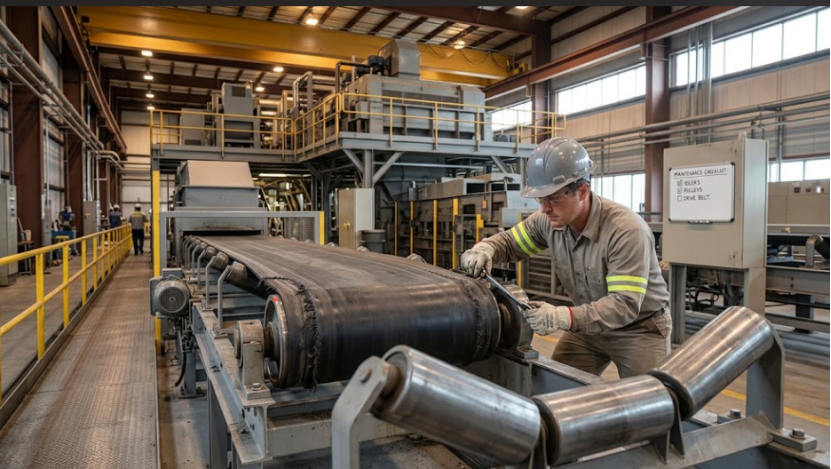
The conveyor belt is one of the most common yet most overlooked pieces of equipment on a production line. It silently handles the task of transferring materials between processes. But when the belt starts frequently running off track and edge wear accelerates, most people's first reaction is, "Time for a new belt." In reality, in the vast majority of cases, the belt itself isn't the problem
Check No.1: Are the Head and Tail Pulleys Parallel?
The number one cause of belt misalignment is non-parallel head and tail pulleys. When the drive pulley and the tail pulley are not on the same axis, the belt will naturally drift toward the side with less resistance during operation, creating a "tight on one side, loose on the other" condition. Over time, this leads to severe edge wear. The inspection is simple: stretch a thin string between the same-side end points of both pulleys, then check if the other side is parallel. If the deviation exceeds the specified tolerance, adjust the position of the pulley stands.
Check No.2: Are Any Idler Rollers Seized and Not Rotating?
If a carrying idler roller beneath the belt becomes seized and stops rotating, the belt will slide and rub against the roller surface instead of rolling over it, dramatically increasing friction resistance. This not only accelerates belt wear but can also cause the motor to overload and trip. During inspection, simply spin each idler roller by hand to check if it rotates freely. If any roller feels stuck, replace the bearing or the entire roller promptly.
Check No.3: Is the Material Drop Point Centered?
Whether the material lands in the center of the belt is equally critical. If the drop point consistently deviates from the centerline, material will continuously pile up on one side of the belt, overloading that side. The belt will naturally shift toward the heavier side. The simplest fix is to install an adjustable deflector plate at the chute outlet to guide the material to the center of the belt. Also, check that the belt scraper at the discharge end is working properly. Otherwise, residual material will stick to the return side, causing abnormal wear between the rollers and the belt surface.


