

| Contact Us |
| Name:colin |
| Email:colin@xhhjtech.com |
| T e l:+86 18602602237 |
Stainless Steel Dust-Free Feeding Stations: Which Industries Need This Powder Feeding Solution?
Manually opening and feeding bags of powder can cause dust pollution, material waste, poor workshop environmental conditions, also health risks for workers. A stainless steel dust-free feeding station uses a sealed, negative-pressure design to control dust during bag opening and feeding. It is widely used in various industries.
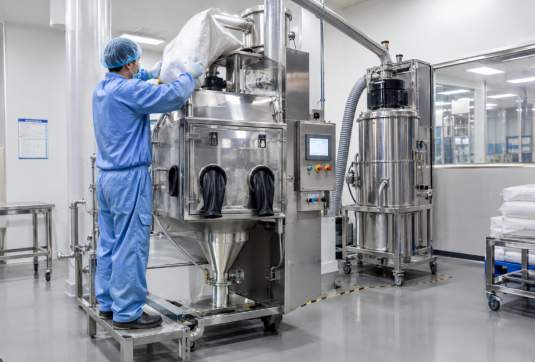
Pharmaceuticals and health supplements are key applications. These industries must meet GMP requirements and active pharmaceutical ingredients, herbal powders and pharmaceutical excipients can cause cross-contamination during feeding. Stainless steel surfaces can be polished for easy cleaning, while the equipment's internal design minimizes dead corners and supports cleaning validation. Built-in dust collection and screening modules remove clumps and impurities while preventing dust from spreading, helping maintain a clean production environment.
Food and food additive manufacturers also benefit from this solution. Starch, milk powder, food colorings and seasoning powders require high hygiene standards. Food-grade stainless steel offers corrosion resistance, and the equipment is easy to clean, reducing material residue, contamination risks, and powder waste.
New energy material manufacturers are increasingly adopting these systems. Lithium battery cathode and anode powders are fine, easily airborne, and may pose static electricity risks. Explosion-proof and anti-static components can be added as needed. The sealed feeding station can also connect directly to a vacuum conveying system, reducing dust-related safety risks.
Fine chemicals, pigments, and rubber and plastic additives are other common applications. Stainless steel helps resist corrosion, protects workers from irritating dust, and allows screening modules to remove clumps and foreign materials, ensuring stable feeding for subsequent processes.
Veterinary medicine, mineral powders, and advanced material processing industries can also benefit. The key factors are whether manual bag opening, excessive dust, strict cleanliness, explosion protection or cross-contamination prevention are major concerns. Equipment can be custom-designed according to material properties and workshop layout, making it a practical solution for improving dust control and production cleanliness.


