
Vacuum Conveyor


Details
This equipment uses negative pressure technology to achieve automated material transfer. Designed and manufactured according to industry standards, it meets FDA and GMP certification requirements. The system effectively prevents particle stratification and powdering, preserving physical material properties. Dense-phase vacuum conveying delivers high efficiency with low energy consumption. A modular structure allows quick disassembly and easy cleaning. High-precision filters prevent dust leakage. Imported actuation components provide low failure rates and long service life. HMI touchscreen operation is simple and intuitive. Multiple derivative models are available for different materials and conditions including explosion-proof, corrosion-resistant, and sterile applications. Custom designs with automatic CIP cleaning and drying can be provided.
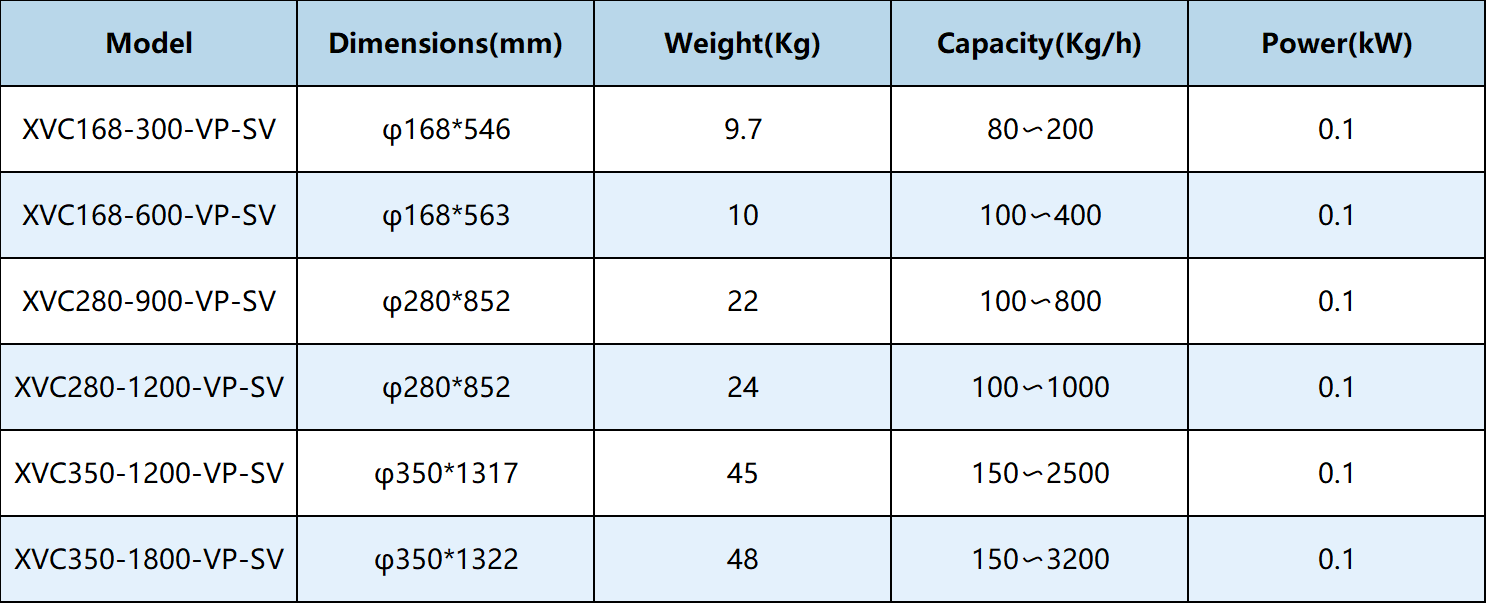
Technical Specification:
Core Advantages
Designed and manufactured to industry standards, meeting FDA and GMP certification requirements.
Effectively prevents particle stratification and powdering, preserving physical material properties.
Dense-phase vacuum conveying is efficient and energy-saving.
Modular structure allows quick disassembly and easy cleaning.
High-precision filters prevent dust leakage.
Imported actuation components provide low failure rates and long service life.
HMI touchscreen operation is simple and intuitive.
Multiple derivative models available for various materials and conditions including explosion-proof, corrosion-resistant, and sterile applications.
Custom designs with automatic CIP cleaning and drying.
Product Features
This vacuum conveyor features dense-phase negative pressure conveying, modular quick-disassembly construction, high-precision filtration, imported actuation components, HMI touchscreen control, and options for explosion-proof, corrosion-resistant, sterile, and CIP-cleaned designs.
Product Applications
Designed for automated material transfer, this equipment is suitable for pharmaceutical, food, chemical, and material industries requiring dust-free, gentle, and contamination-free conveying of powders or granules.
Precautions
Inspect filters and seals before each operation. Do not exceed rated vacuum pressure. Clean the conveyor immediately after handling sticky or cohesive materials. Disconnect compressed air and power before disassembly. Replace worn filters promptly.
Picture of Factory
 |  |  |
Why Choose Us
 | 1. Engineering depth Layouts are checked against your P&ID and hazard study to align interfaces, venting, and access platforms with site standards. 2. Manufacturing traceability Material certificates and weld maps can be bundled for FAT documentation, supporting audit-ready pharmaceutical projects. 3. Lifecycle support Spare parts kits, on-site commissioning, and remote guidance shorten startup time and keep feeding performance stable. |
FAQ
Q: What does "dense-phase vacuum conveying" mean for material quality?
A: Dense-phase moves material at lower speed in a packed slug form, which significantly reduces particle attrition and prevents fines generation compared to dilute-phase conveying.
Q: How quickly can the modular unit be disassembled for cleaning?
A: The modular design uses clamp connections without tools. A complete teardown and reassembly typically takes10–15 minutes depending on model size.
Q: Can the same unit handle both free-flowing granules and fine powders?
A: Yes. Different filter grades and conveying parameters can be selected. Explosion-proof and sterile models are also available for sensitive applications.

You Might Also Like


